
You have heard it a hundred times: “Thank you for your service.” You hear it at the airport, in line at the grocery store, or from the guy who notices your hat at a sporting event. Many nod and say, “Appreciate it,” knowing that most people mean well.
A “thank you” does not pay the rent, fix your knee or your back, or explain why you cannot sleep, why the job did not work out, or why the house feels too quiet. It does not replace the people who once had your six.
For some Veterans, making it home does not mean the battles are over. That is a reality many know all too well.
Built to embrace the suck
The lesson came early. Push through. Handle it. Don’t be the weak link. That mindset got you through basic, deployments, long training cycles and days most people will never understand.
Here’s what nobody is warned about when they get out: That switch doesn’t turn off. Out here, it can turn on you. It tells you to keep your head down and deal with it yourself. It tells you that everybody else has civilian life figured out and you’re the problem. It tells you you’re a burden.
That voice lies. Research shows two of the biggest drivers of Veteran suicide are feeling like you don’t belong and feeling like you’re a burden. Pulling away from people is a warning sign, not a plan. If you’ve gone quiet lately, pay attention to that.
Nobody clears the building alone
In uniform, you called for support because that’s how the mission got done. Nobody thought less of you for it. Nobody handed out medals for going it alone.
The same rule applies now. Asking for backup isn’t quitting. Walking through a door and asking for help takes more guts than most people realize. If anybody deserves recognition, it’s the Veteran who shows up for themselves.
What real support looks like
Anyone can say they “get it.” You’ve heard offers of help from plenty of people who couldn’t deliver. So, here’s what you should expect:
- Someone who listens first. They don’t decide what you’re dealing with before you’ve said two words.
- Your call, your terms. You decide what you want help with and when. Nobody runs your life for you.
- Help with the real stuff. That means work, housing, legal trouble, family strain and sleep, not just “mental health.” If you’re in trouble with the law and can’t afford a lawyer, options such as Veterans Treatment Court may help.
- A place that doesn’t feel like a waiting room. You’re a person, not a number in a system.
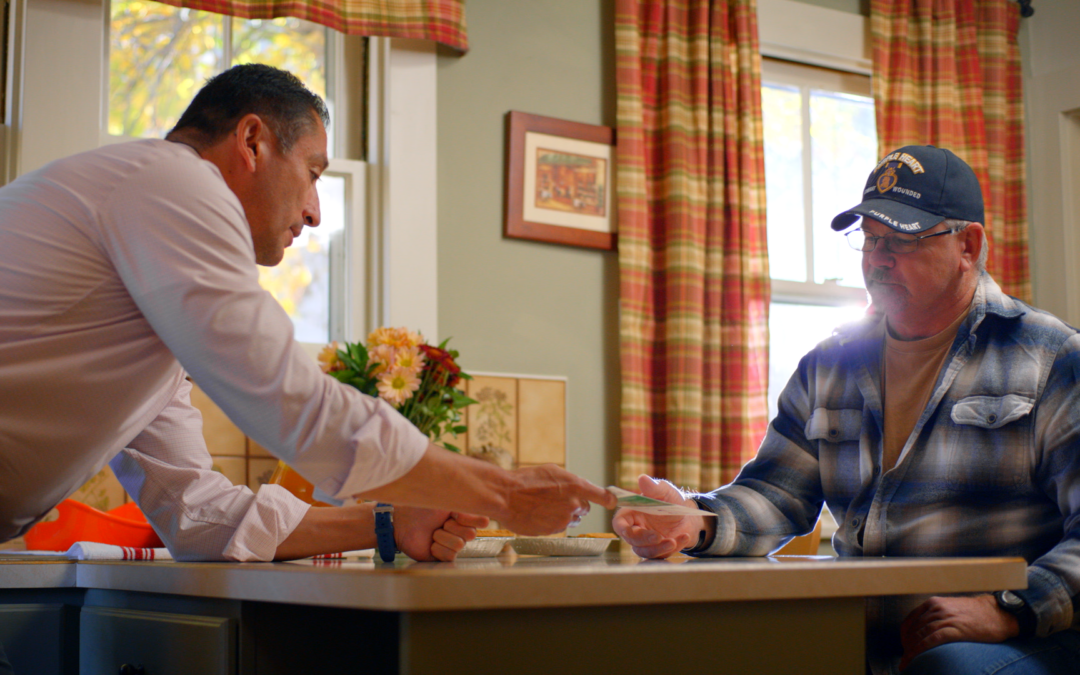
That’s how Next Chapter works. No flags on the door, no clipboard judgment. Just people who will sit with you until you’re ready to talk.
Check on your people
You know who comes to mind. The guy from your unit who stopped answering texts. The one who quit showing up at the range. The one whose jokes got a little darker.
Don’t send a “hope you’re good” text. Call. Show up. Be the battle buddy you’d want.
If it’s heavy right now
Dial 988 and press 1, text 838255 or chat online at VeteransCrisisLine.net/Chat. It’s free, confidential and available 24/7. You don’t have to be enrolled in VA benefits or health care to use it.
You can also reach Next Chapter at nextchapterco.org or 1-888-719-VETS.
Taking off the uniform didn’t end your service. The mission changed. This one’s about you, and you don’t have to run it alone.